
Last updated November 15, 2026
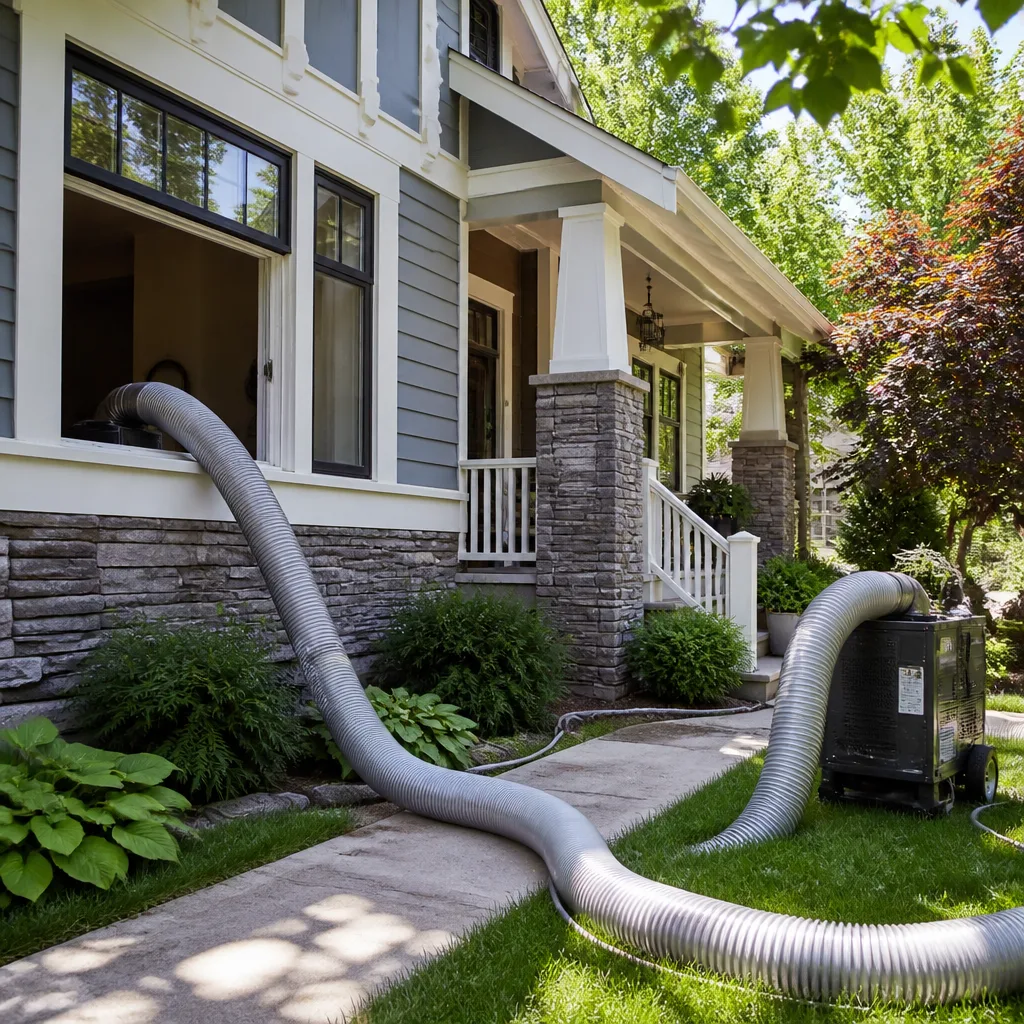 Whole-home duct cleaning
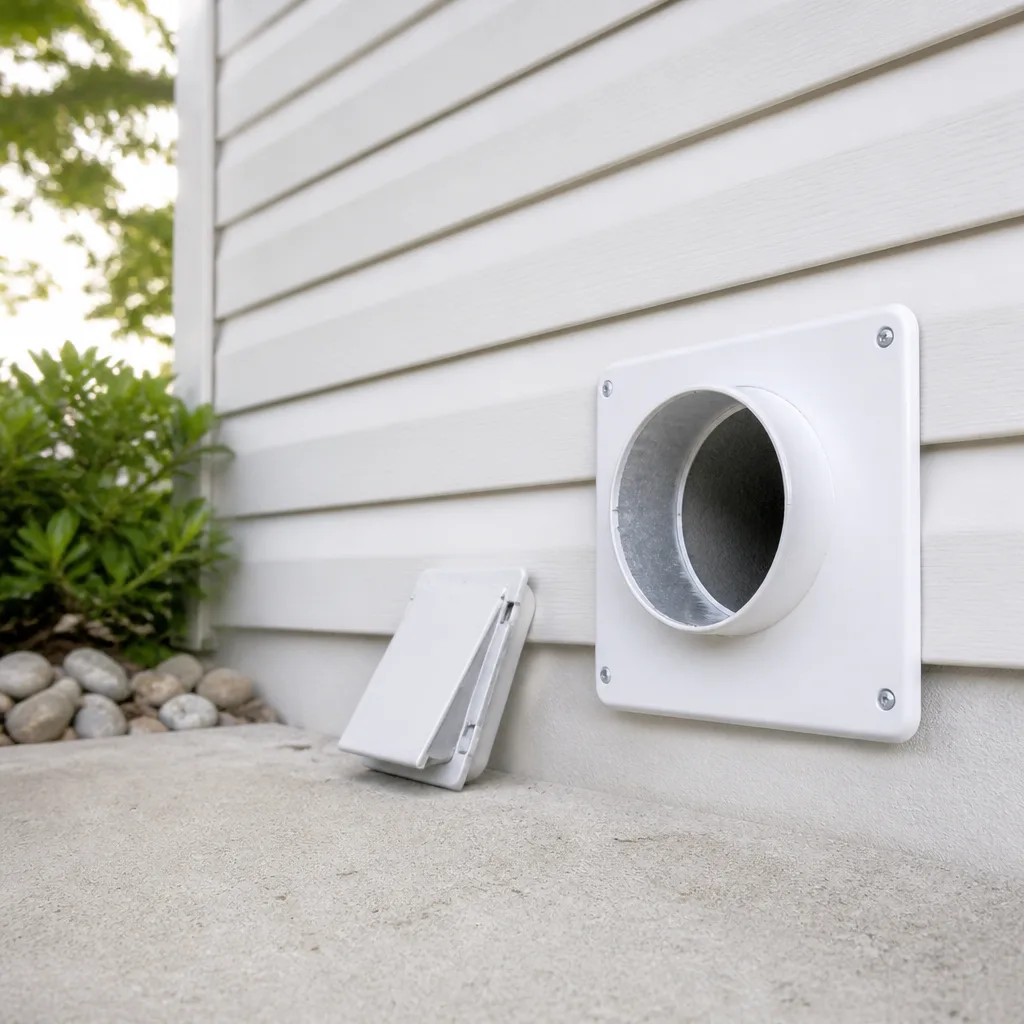 Dryer vent cleaning
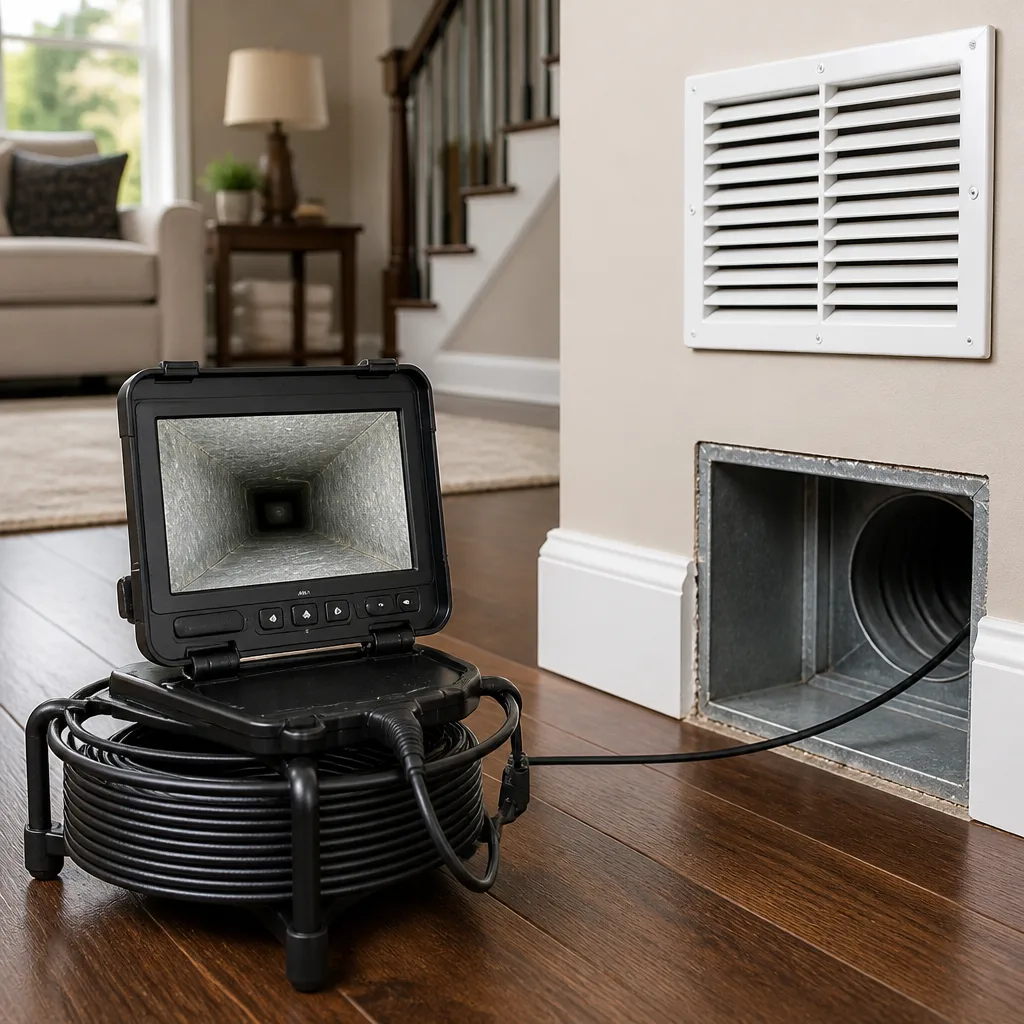 Camera inspection
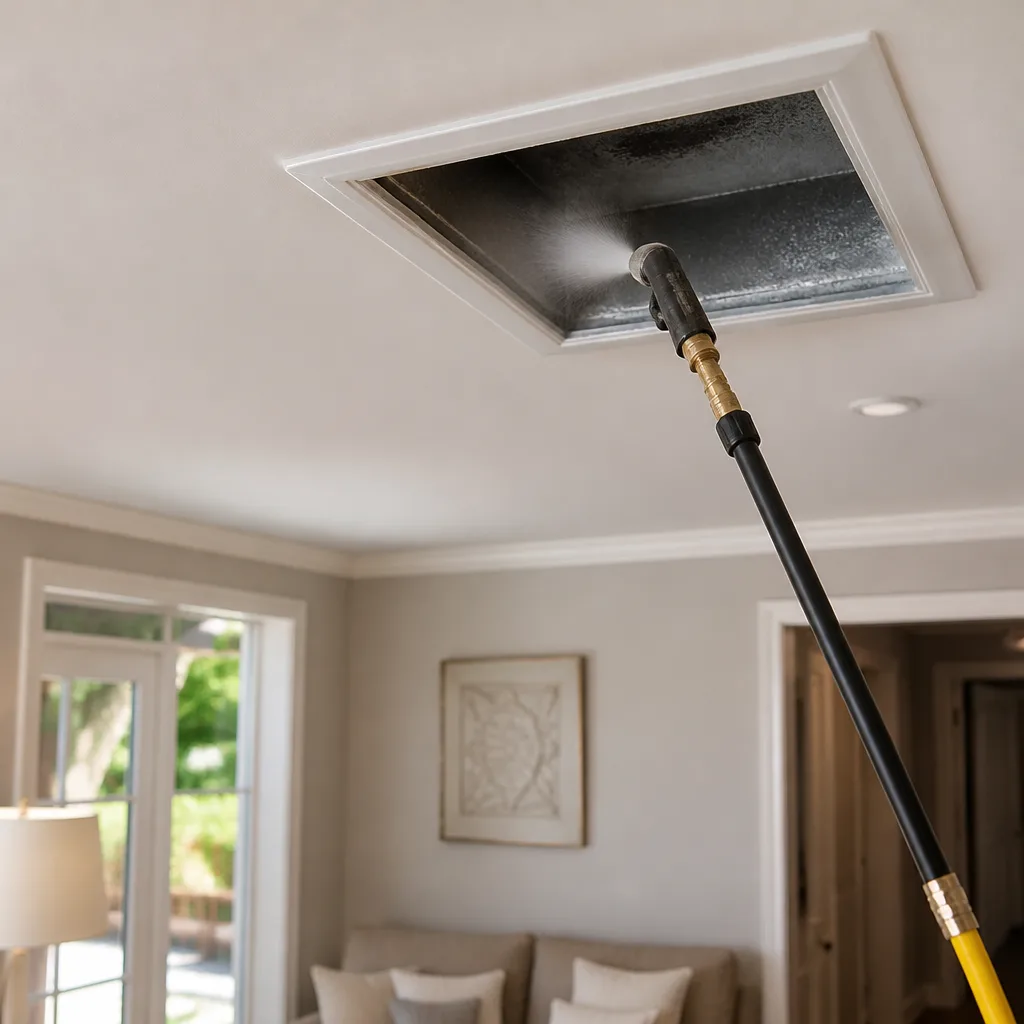 Sanitizing & deodorizing
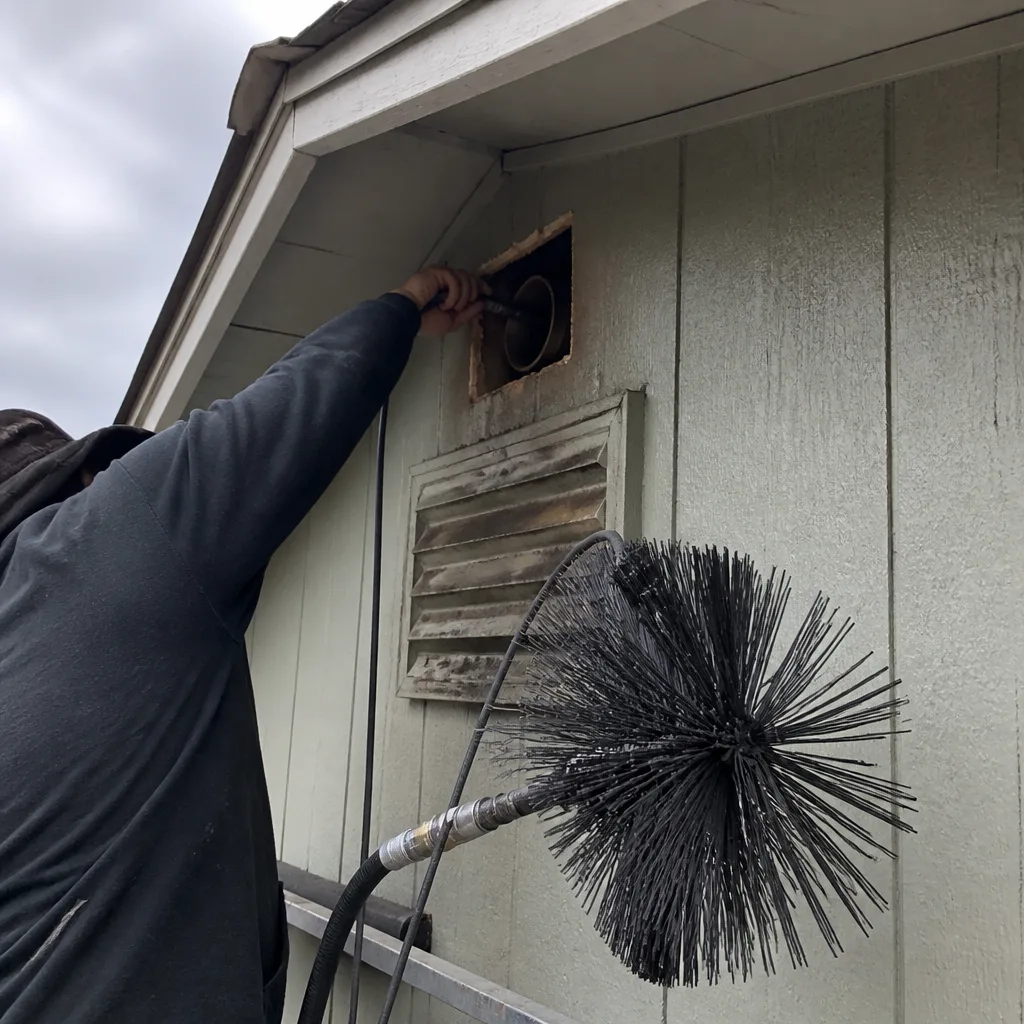
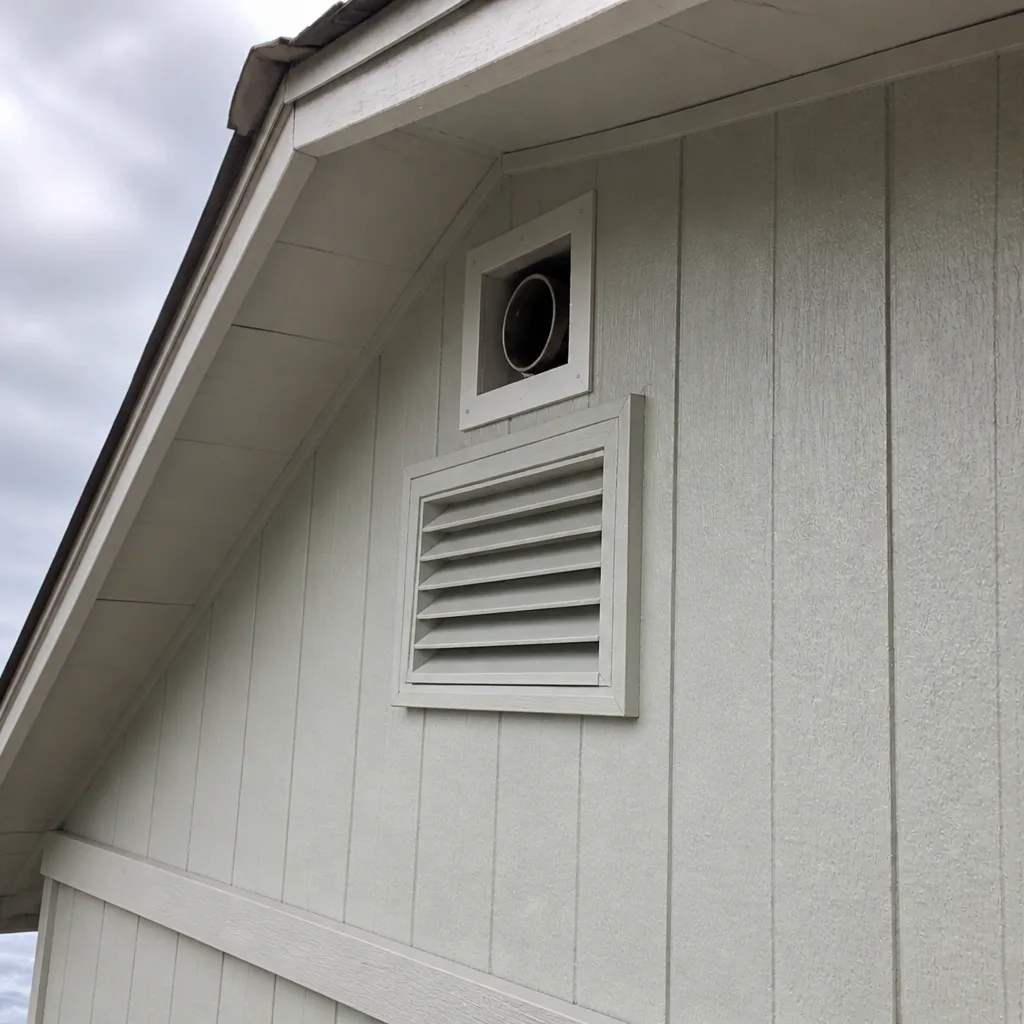
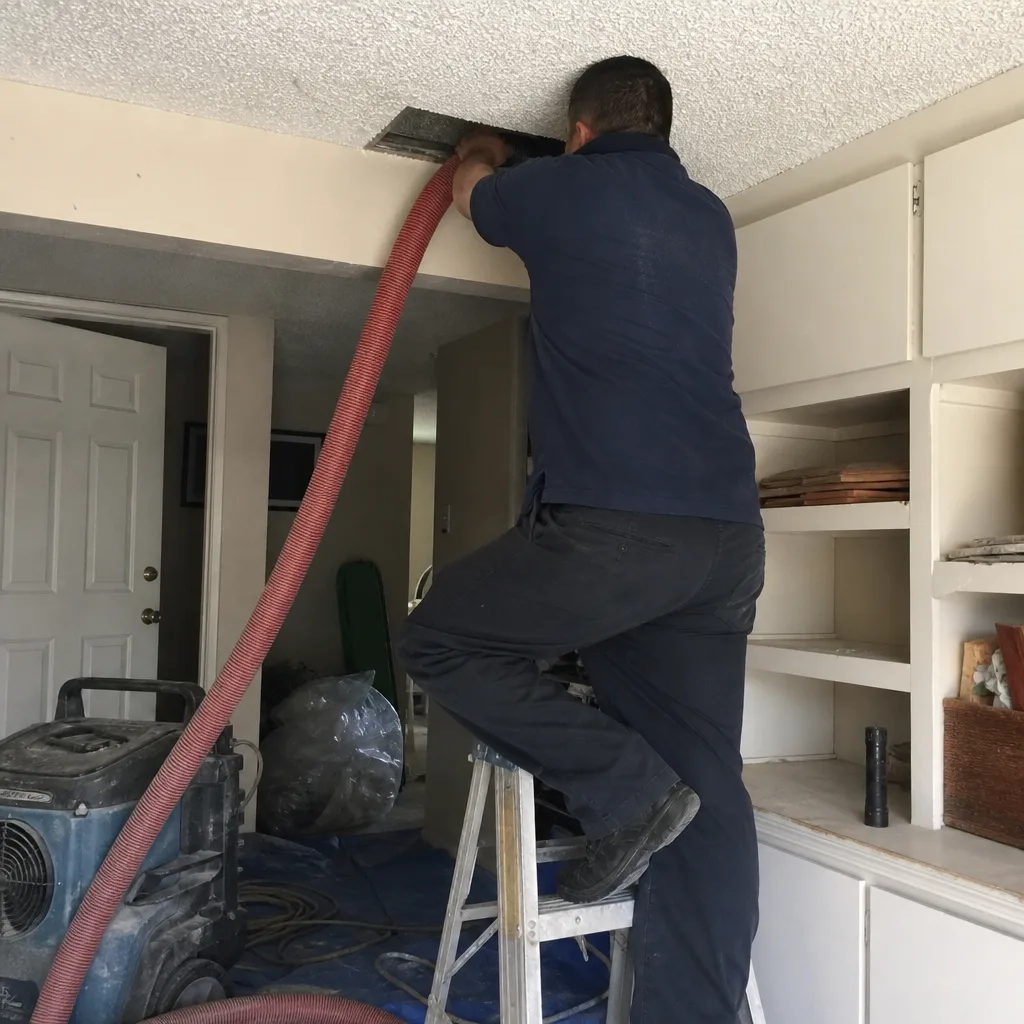
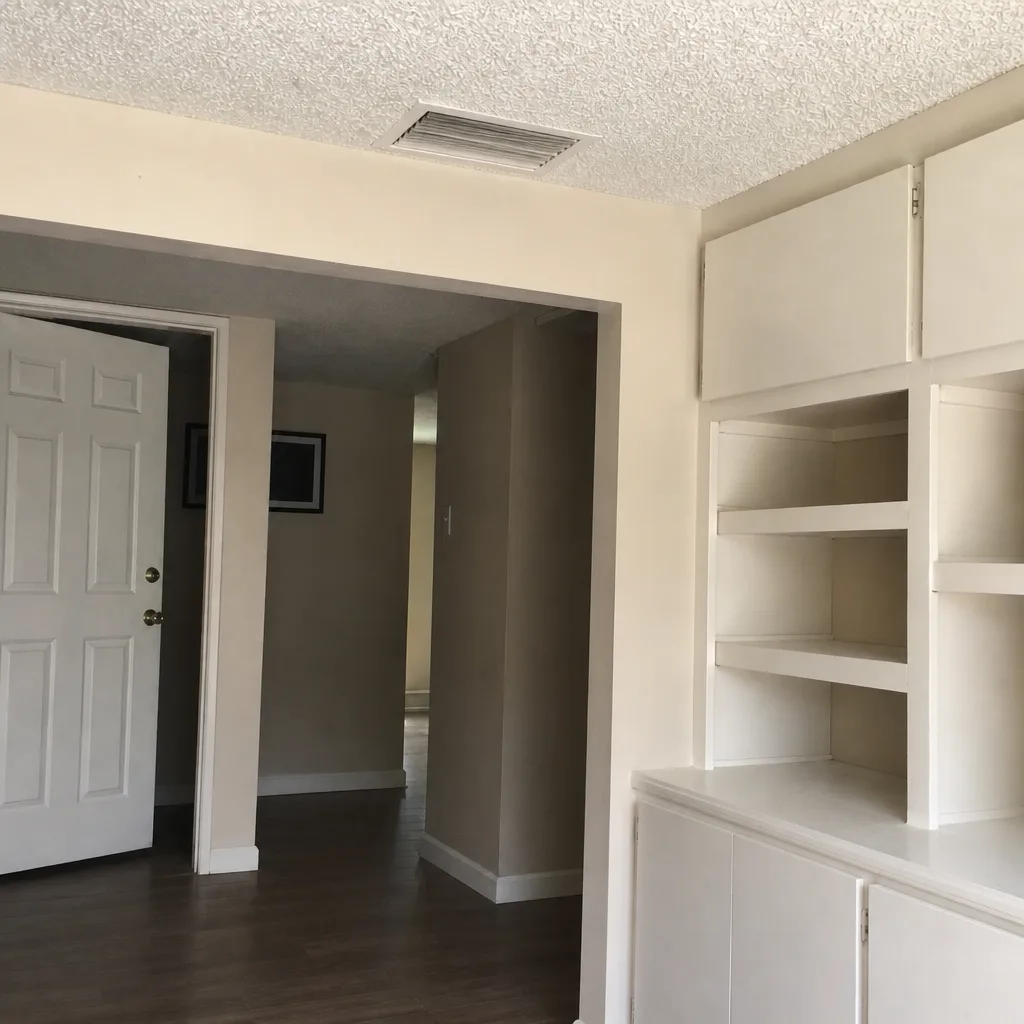
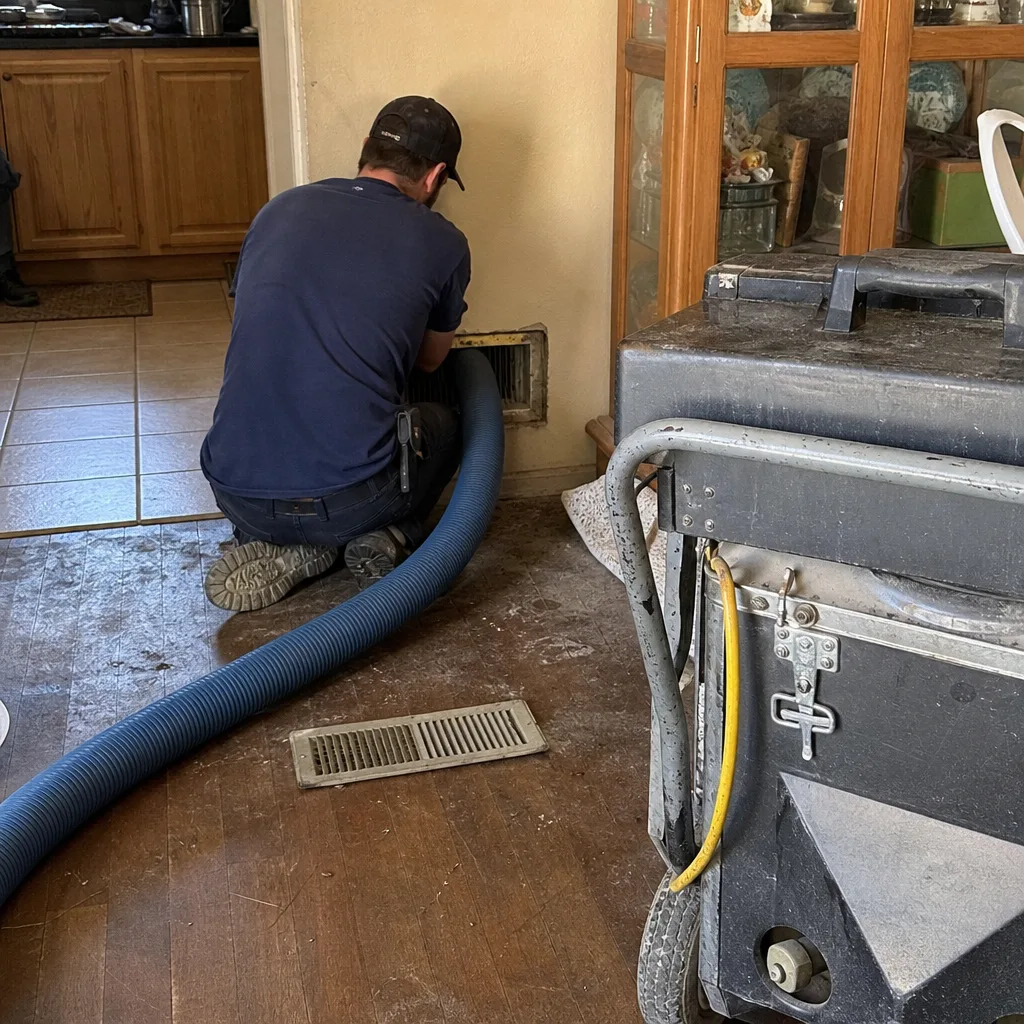
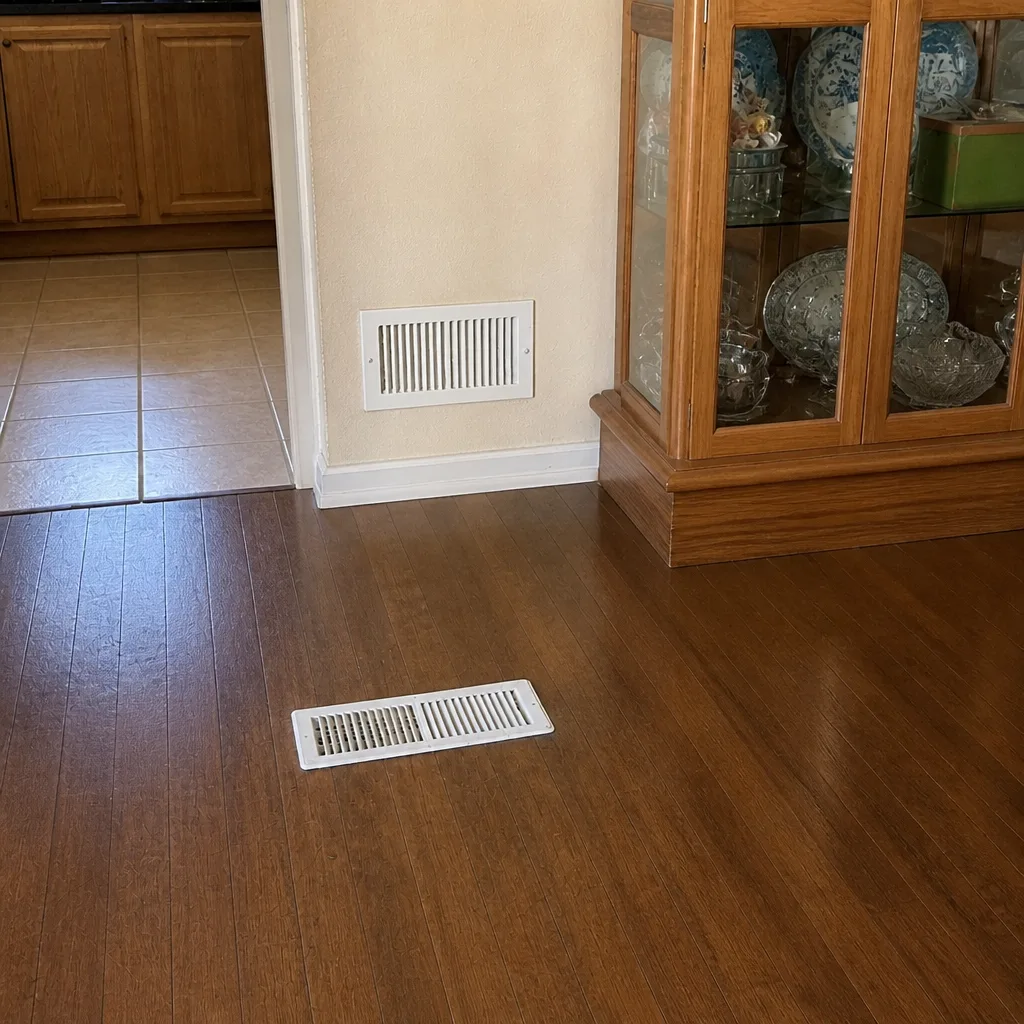
Whole-system duct and dryer vent check with before-and-after photos - you see exactly what came out of your vents
That "$99 whole-house special" is a bait ad - the real number appears once they are in your hallway, or the "clean" is a shop-vac at the register. We photograph the inside of your ducts before and after instead.
Air Duct Cleaning Cost Breakdown: The Ventura Homeowner’s Reference for 2026
The $99 duct cleaning special and the $1,200 professional job are not two prices for the same work. They’re two different services that happen to share a name. One sends a vacuum hose into a few accessible vents and calls it done. The other uses rotary-brush agitation, negative-pressure containment, and camera verification to clean every segment of the system. In Ventura, the gap between the lowest and highest quotes for the same home often exceeds $900, and it almost never comes down to profit margin. It comes down to equipment, scope, and whether anyone actually touched every duct run. This guide breaks down exactly what drives the cost so you can tell the difference before you book.
Quick Answer
Professional air duct cleaning in Ventura typically runs $300 to $700 for an average single-story home, with larger two-story properties and heavy-contamination jobs pushing into the $800 to $1,200 range. Whole-system pricing is the standard here – not per-vent add-ons – because a proper clean covers every supply run, every return, and the air handler in one scope of work. The written estimate you receive before any work begins sets the final price.
Styles & brands we work with
- Whole-home duct cleaning
- Dryer vent cleaning
- Camera inspection
- Sanitizing & deodorizing
Table of Contents
- Per-Vent Pricing vs. Whole-System Pricing
- What Equipment Actually Costs and What It Buys
- Line-Item Breakdown of a Full Professional Scope
- Add-On Cost Triggers Homeowners Don’t Anticipate
- How to Benchmark a Ventura Quote Against 2026 Pricing
- Bids That Cut Scope or Pad Unnecessary Services
- Common Mistakes to Avoid
- When to Call a Professional
Per-Vent Pricing vs. Whole-System Pricing
The two pricing models you’ll encounter for duct cleaning are per-vent and whole-system. They are not interchangeable, and they don’t produce the same result.
Per-vent pricing charges a set amount for each vent, floor register, or return grille someone counts in your home. It looks transparent because you can multiply the number yourself. The problem is what it leaves out: the trunk lines between vents, the main supply plenum, the return ducts that run through walls, and the air handler itself. A crew can clean twelve vent openings and leave the largest volume of the system untouched. That’s not a full cleaning. It’s a surface pass.
Whole-system pricing gives one flat price for the entire duct system: all supply runs, all returns, the air handler, and the accessible plenum. The price is agreed before work starts, and it doesn’t change based on how many vents the technician counts. You know the number going in, and the scope is defined by the system, not by an opening count.
In Ventura, where much of the housing stock has ceiling-supplied forced-air systems with accessible attic runs, whole-system pricing is the more reliable model. Here’s why:
- Scope is defined by the system, not the number of registers a technician can see.
- No incentive to limit work to the easiest-to-reach openings.
- One flat price agreed before work starts, with nothing added after the fact.
- The air handler gets included, which per-vent pricing usually excludes.
If you’re comparing quotes, ask each company one question: “Does your price include every supply run, every return, and the air handler?” If the answer is vague, you’ve found a scope gap.
What Equipment Actually Costs and What It Buys
Equipment is the single largest reason two quotes for the same home can differ by $600 or more. Not all duct cleaning equipment does the same thing, and the price difference reflects real differences in what actually gets removed.
A basic setup uses compressed air and a shop-style vacuum. It can dislodge loose surface dust but has no mechanical agitation and no HEPA containment for fine particulate. The technician blows air through, vacuums what comes loose, and leaves. The equipment cost is low because the equipment does very little.
A professional-grade setup is different in kind, not just quality. Rotobrush and Nikro rotary-brush systems use a rotating brush head on a flexible shaft to physically agitate the duct walls while a vacuum extracts the loosened material. That agitation is what separates a clean duct from a scuffed one. Surface dust comes off in a pass with brushes; it does not come off with air alone. For elevated contamination scenarios – post-renovation dust, rodent intrusion, or visible buildup in the plenum – Abatement Technologies air-filtration equipment provides HEPA-grade negative pressure that keeps particulates contained during the job rather than recirculating into the living space.
What does that overhead buy you?
- Mechanical agitation that dislodges adhered debris, not just loose dust.
- HEPA containment so what’s released during cleaning doesn’t settle back into your home.
- Camera verification so you can see the condition of the duct interior before and after.
- A written record of what was found and what was cleaned.
If a quote is at the low end of the range but can’t tell you what equipment it uses, the price is reflecting the tool, not the value of your system. For a deeper look at what a complete clean involves, see our air duct cleaning page.
Line-Item Breakdown of a Full Professional Scope
A professional duct cleaning job isn’t a single action. It’s a sequence of tasks, each of which contributes to the final scope and the final price. Here’s what a complete scope includes and what each component typically costs in a whole-system estimate:
- Supply duct cleaning: Every supply run from the air handler to the vent opening. Mechanical agitation with rotary-brush equipment, vacuum extraction. Typically $150 to $350.
- Return duct cleaning: The return side often carries more debris than the supply side. Camera inspection first, then agitation and extraction. Typically $80 to $200.
- Air handler cleaning: The interior cabinet, blower compartment, and evaporator coil exterior. Includes coil inspection. Typically $60 to $150.
- Sanitization (when applicable): A fogging application to reduce microbial growth on duct surfaces when contamination is present. Only when condition warrants it – usually $80 to $150.
- Post-job documentation: Before-and-after camera photos of the duct interior, written findings, and a record of what was cleaned. Standard in any professional scope.
The exact split of the estimate depends on the home. A single-story Ventura home with accessible attic runs and a standard split system typically runs $300 to $550. A two-story home with a longer supply run count and a crawl-space return might reach $500 to $800. Older homes with original sheet-metal ductwork and uninsulated plenums often land toward the higher end. If the system has not been cleaned in many years, the volume of material alone changes the scope.
When you receive a written estimate, each of these line items should be present or accounted for. If the estimate only says “duct cleaning – price” without a scope breakdown, ask for the detail before you book.
Add-On Cost Triggers Homeowners Don’t Anticipate
Most quotes don’t account for conditions that aren’t visible until the technician starts working. Knowing what those conditions typically cost prevents the surprise of a scope change mid-job – and helps you spot when the add-on is real and when it isn’t.
1. Mold Treatment
Visible microbial growth on duct surfaces is a condition, not a complication. If the interior of a duct has been wetted or had sustained high humidity, mold can establish itself. Treatment involves active cleaning of the surfaces plus a sanitization application. Typical add: $80 to $150 if discovered during cleaning. This is why some estimates include a sanitization line and some don’t – it depends on condition.
2. Rodent Debris Removal
Rodent activity in the duct system leaves droppings, nesting material, and contamination in the run. Removing it safely requires HEPA-grade filtration and containment, which is where equipment like Abatement Technologies matters. A standard cleaning with a rotary brush and vacuum isn’t designed for contaminated debris. Removal scope can add $100 to $250 depending on the spread. If a technician finds rodent debris mid-job, the cost of handling it properly should be explained before work continues – not after.
3. Damaged Duct Segment Repair
Cleaning is where duct problems become visible. A disconnected run in the attic, crushed flex duct, a cracked trunk line, or a torn section of insulation is usually discovered during the clean. We offer air duct repair for exactly this reason: a duct system with a broken segment needs the break fixed before the next dust load gets pushed through it. Repair scopes vary widely – a single disconnected flex run reconnected is a smaller line item than rebuilding a section of damaged trunk line.
4. Dryer Vent Inclusion
Dryer vent cleaning is a separate service, not an afterthought. The vent run is not connected to the HVAC system, and a dryer vent clean requires different tools to clear the lint that accumulates along the full length of the run. Lint is a genuine fire risk when it builds up enough to restrict airflow. We treat dryer vent cleaning as a safety service, and it’s priced separately from the duct clean because it’s a different job. If you’ve never had the dryer vent done, it’s worth adding while the equipment is on site.
5. Filtration Upgrades
Some homes have a one-inch filter slot that limits filtration. If you want a higher-MERV setup or a whole-home media cabinet, a professional cleaning is the sensible time to do it. We’re set up to work with Honeywell and Aprilaire filtration systems, so the cleaning and the filtration upgrade can be handled in one visit rather than two separate appointments.
How to Benchmark a Ventura Quote Against 2026 Pricing
Benchmarking a quote means checking it against the realistic regional range and against the scope the price claims to cover. Here’s a straightforward process for doing that:
- Establish the whole-system range. For a standard single-story Ventura home, expect $300 to $700 for a complete clean including air handler. For a two-story with a longer run count, $500 to $1,000. Anything well below the floor almost always reflects a reduced scope, not a bargain.
- Ask what’s included in the price. Every supply run, every return, the air handler, and the documentation. If any of those are excluded, the price isn’t comparable to a full scope.
- Ask what equipment is used. Rotary-brush agitation and vacuum extraction are the baseline. HEPA containment for elevated conditions. Compressed air alone is not a cleaning.
- Ask about post-job documentation. Before-and-after photos of the duct interior. This is the one thing that tells you whether the work was actually done.
- Compare like to like. A $99 per-vent quote for 12 vents ($1,188) is not a $300 whole-system quote with a lower price. It’s a different scope with a different baseline.
Ventura homes have a particular characteristic worth noting for benchmarking: the mild climate here means heating and cooling systems often run in both modes year-round, and the dust load that accumulates inside a duct system reflects that mixed usage. A home with a system that has never been professionally serviced will typically need more time inside the duct than one cleaned regularly. That doesn’t mean the price should jump, but it does mean a quote that doesn’t include a proper inspection step is not a quote you can trust to cover the actual work.
Bids That Cut Scope or Pad Unnecessary Services
The duct cleaning industry earned a reputation for bait-and-switch for a reason. A low headline price that becomes a much larger invoice once the technician is on site is the most common complaint homeowners bring to us. The problem isn’t just the price change – it’s that the original scope wasn’t a cleaning at all.
Bids that undercut scope typically look like this:
- A per-vent price that excludes the air handler. The air handler is where the dust concentrates. A quote that skips it is incomplete.
- A “full system” price with no return duct line item. Return ducts carry more material than supplies; a quote that doesn’t address them isn’t full-system.
- A price that requires a minimum number of vents to qualify. That’s a scope threshold, not a cleaning.
Bids that pad scope look like this:
- Sanitization added to every job regardless of whether contamination is present.
- Mold treatment quoted without evidence. If the technician can’t show you what they’re treating with a camera view, ask why it’s on the estimate.
- Duct sealing or repair scopes quoted alongside cleaning that nobody inspected first.
The professional standard is this: one flat price per system, agreed before work starts. The technician inspects first, documents what they find, and if conditions require additional scope, explains it before continuing. No mid-job surprises. Before-and-after photos of your own ducts as proof of what was cleaned.
Our technicians have up to 11 years of experience with these systems, and we work with the same professional-grade equipment on every job. If you want a benchmark on your quote, call (844) 834-2166. Estimates are free. We answer 24/7. Fast dispatch from 7am to 7pm, Sunday through Friday.
Common Mistakes to Avoid
Here are the specific mistakes we see homeowners make when they hire for duct cleaning in Ventura:
- Choosing a quote without asking about the air handler. A per-vent price can leave the largest dust reservoir in your system untouched. Ask upfront whether the air handler is included; if the answer is no, the quote isn’t a full cleaning.
- Treating a per-vent price as a whole-system price. Twelve vents at a low per-vent rate can total more than a clean whole-system estimate. Do the arithmetic before comparing, so you’re comparing the same scope.
- Booking a job without a pre-work inspection. The technician needs to see the duct interior before they can set a scope. A quote given over the phone without any inspection is an estimate of a price, not a plan for the work.
- Skipping the documentation. Before-and-after photos are the only record you have that the work was done. Ask for them before the job starts, not after.
- Ignoring the dryer vent while the crew is already there. The dryer vent is the most common fire-risk item in a home that nobody thinks about. If it hasn’t been cleaned, adding it during the same visit is the practical choice.
- Assuming a $99 special covers a full system. It doesn’t. A special at that level is a scope reduction, not a discount on a full cleaning. If the price looks too low to cover a whole system, it isn’t covering a whole system.
- Waiting until the system fails to have it cleaned. Duct cleaning is scheduled work, not emergency work. After a renovation, after new pets move in, or after a system has run for several years without attention, the right move is to book a scheduled cleaning – not to wait until the air handler is strained.
For more on what the full-service version of this looks like in practice, see our Duct Cleaning Ventura page.
When to Call a Professional
Most homes don’t need duct cleaning on a fixed schedule. A pro is the right call in a specific set of circumstances: after a renovation that generated drywall dust and debris; after a rodent problem in the attic or duct space; when you’ve moved into a home with no record of prior duct service; when you notice visible dust accumulation at the registers or a musty smell when the system starts; or when allergies and respiratory irritation get worse in the house. Long-standing systems that have never been serviced are a common case in older Ventura homes.
Duct Cleaning Ventura offers free estimates in Ventura. Call (844) 834-2166. We answer 24/7. Fast dispatch from 7am to 7pm, Sunday through Friday. One flat price per system agreed before work starts, with before-and-after photos of your own ducts. If we find a duct problem during the job, we can address it before we leave.
See the difference
 Before
 After
 Before
 After
 Before
 After
Frequently Asked Questions
Most single-story homes in Ventura fall in the $300 to $700 range for a complete whole-system clean, and two-story homes or heavily contaminated systems run $500 to $1,200. The price is set by the written estimate before work starts, so you know the number going in. Call (844) 834-2166 for an exact quote – estimates are free.
A cheaper quote almost always reflects a smaller scope or lighter equipment, not a better price on the same work. A $99 per-vent quote can leave the air handler and return ducts untouched, and a compressed-air setup has no mechanical agitation to dislodge adhered debris. Ask two questions: what’s included, and what equipment is used. If the answer to either is vague, you’ve found the gap. Call (844) 834-2166 to compare a full-scope estimate.
Before-and-after photos of the interior of your duct system. Camera verification is the only proof that every segment was touched. Any professional scope should include that as a standard part of the job, not an extra. Ask for it before you book. Call (844) 834-2166 and we’ll walk you through what we document on a standard job.
For most homes, every three to five years is reasonable. The number moves depending on conditions: a home with pets, recent renovation, or a long-serving system may need it sooner. Homes in Ventura with forced-air systems that run both heating and cooling seasonally accumulate at a steadier pace. If you can’t remember the last time it was done, that’s the signal. Call (844) 834-2166 for a free estimate.
No – dryer vent cleaning is a separate service with a separate scope, because the dryer vent isn’t connected to the HVAC system and requires different tooling. It’s worth adding whenever the crew is already on site. Lint accumulation in a dryer vent is a real fire risk and the run needs to be cleared end to end. Call (844) 834-2166 to add it to an estimate.
Per-vent pricing charges by the number of vent openings and typically excludes the trunk lines, return ducts, and air handler. Whole-system pricing covers the entire system – all supply runs, all returns, and the air handler – at one flat price agreed before work starts. For a complete clean, whole-system pricing is the more reliable model. Call (844) 834-2166 for a whole-system estimate in Ventura.
The Bottom Line
Air duct cleaning costs in Ventura in 2026 typically run $300 to $700 for a standard whole-system clean on a single-story home, with larger or heavily contaminated systems reaching $500 to $1,200. The cost you’re paying for is scope and equipment: rotary-brush agitation, HEPA containment, camera verification, and a documented clean of every supply run, every return, and the air handler. A $99 per-vent special is a different service with a different scope, not a discount on that work. The written estimate and the before-and-after photos are what tell you which one you’re buying.
For a free estimate on duct cleaning, dryer vent cleaning, or duct repair in Ventura, call (844) 834-2166. We answer 24/7. Fast dispatch from 7am to 7pm, Sunday through Friday. One flat price per system agreed before work starts, and before-and-after photos of your own ducts.
Written by the team at Duct Cleaning Ventura.