
Last updated November 15, 2026
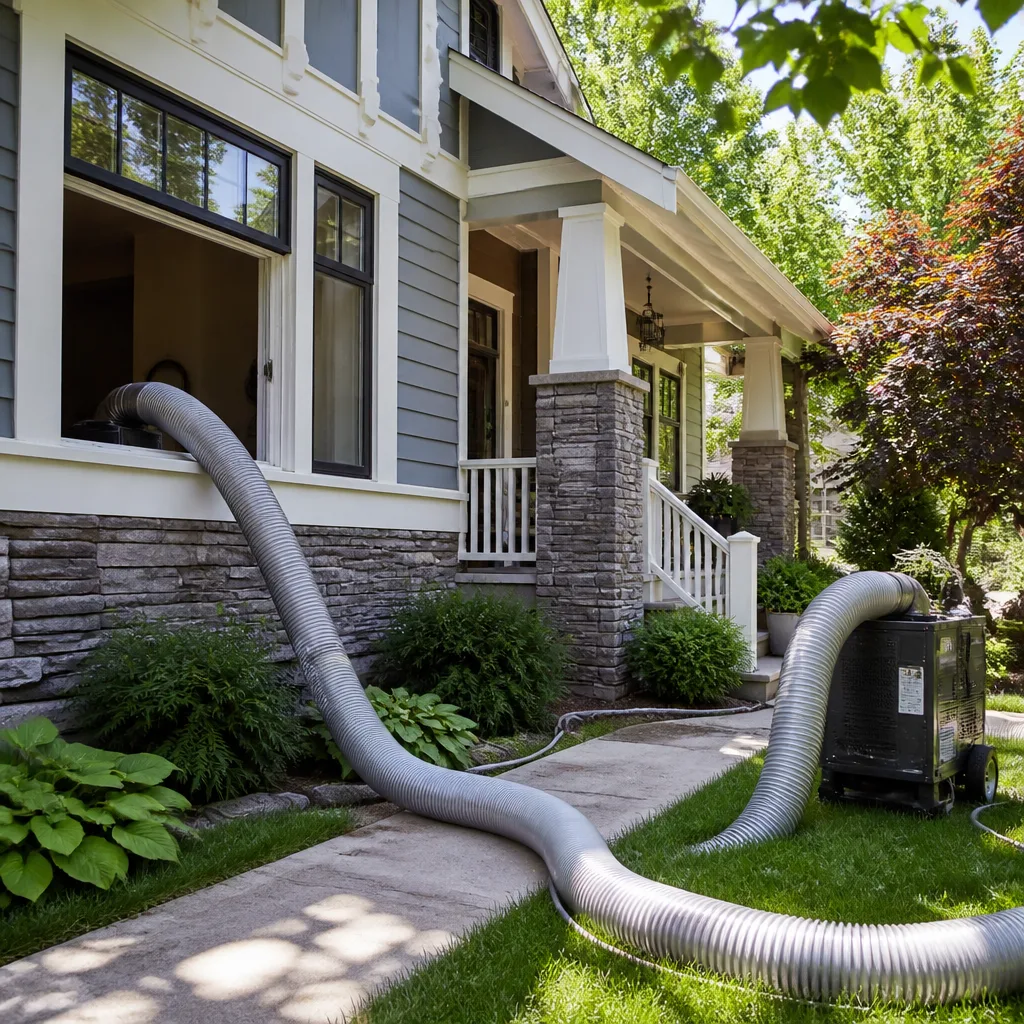 Whole-home duct cleaning
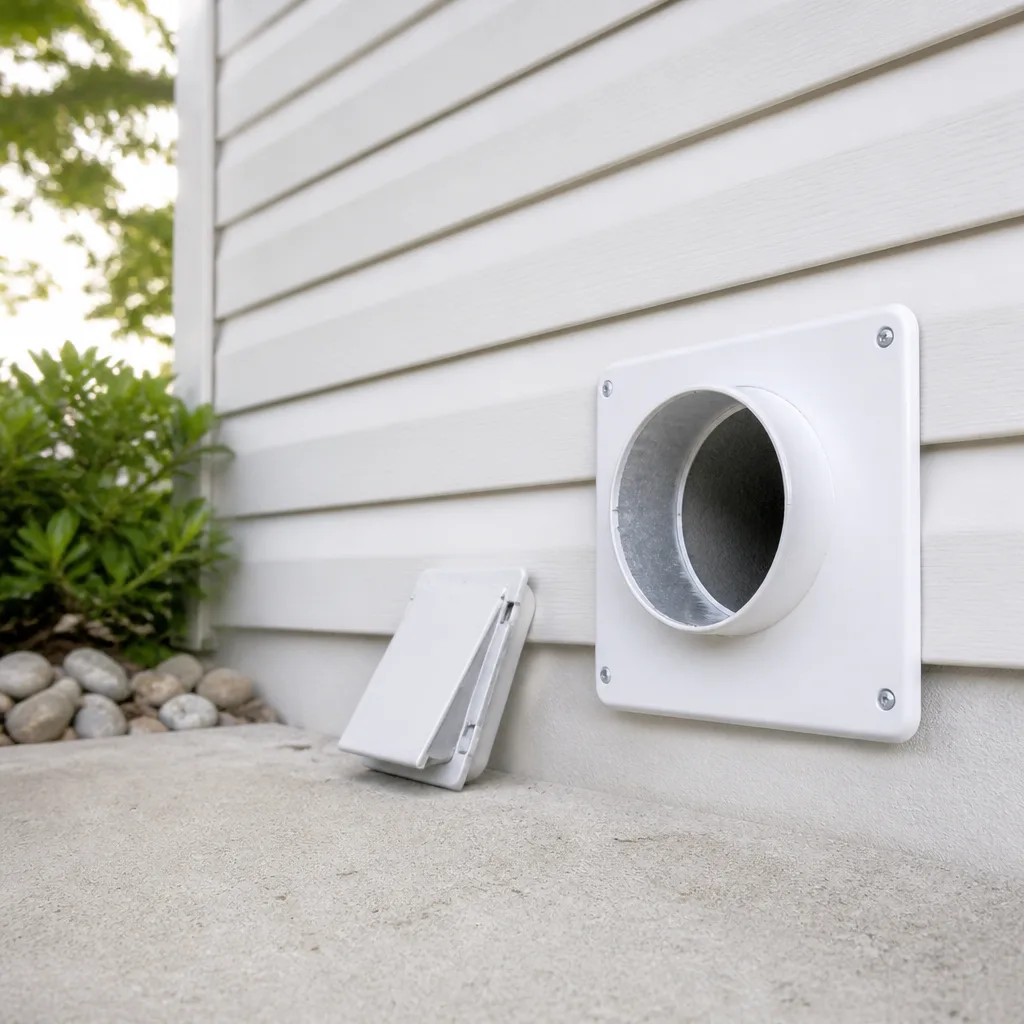 Dryer vent cleaning
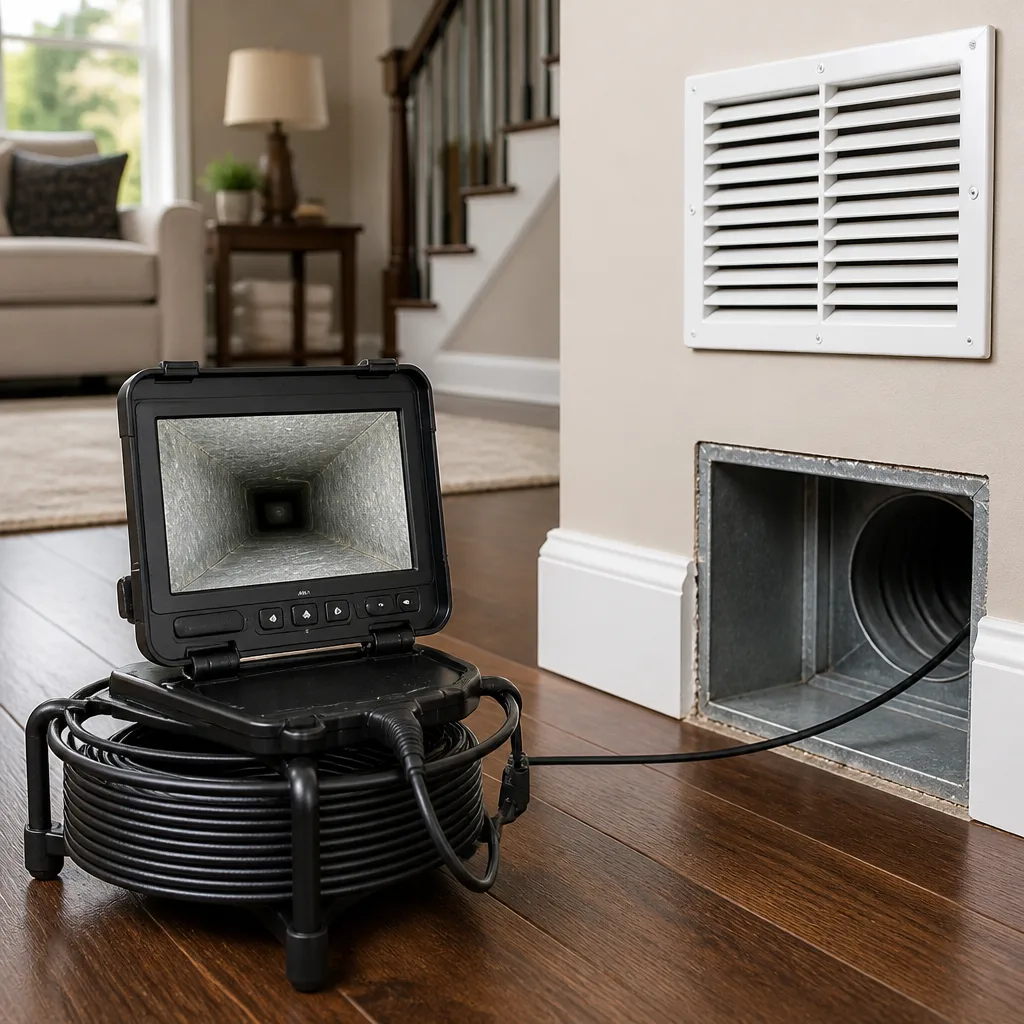 Camera inspection
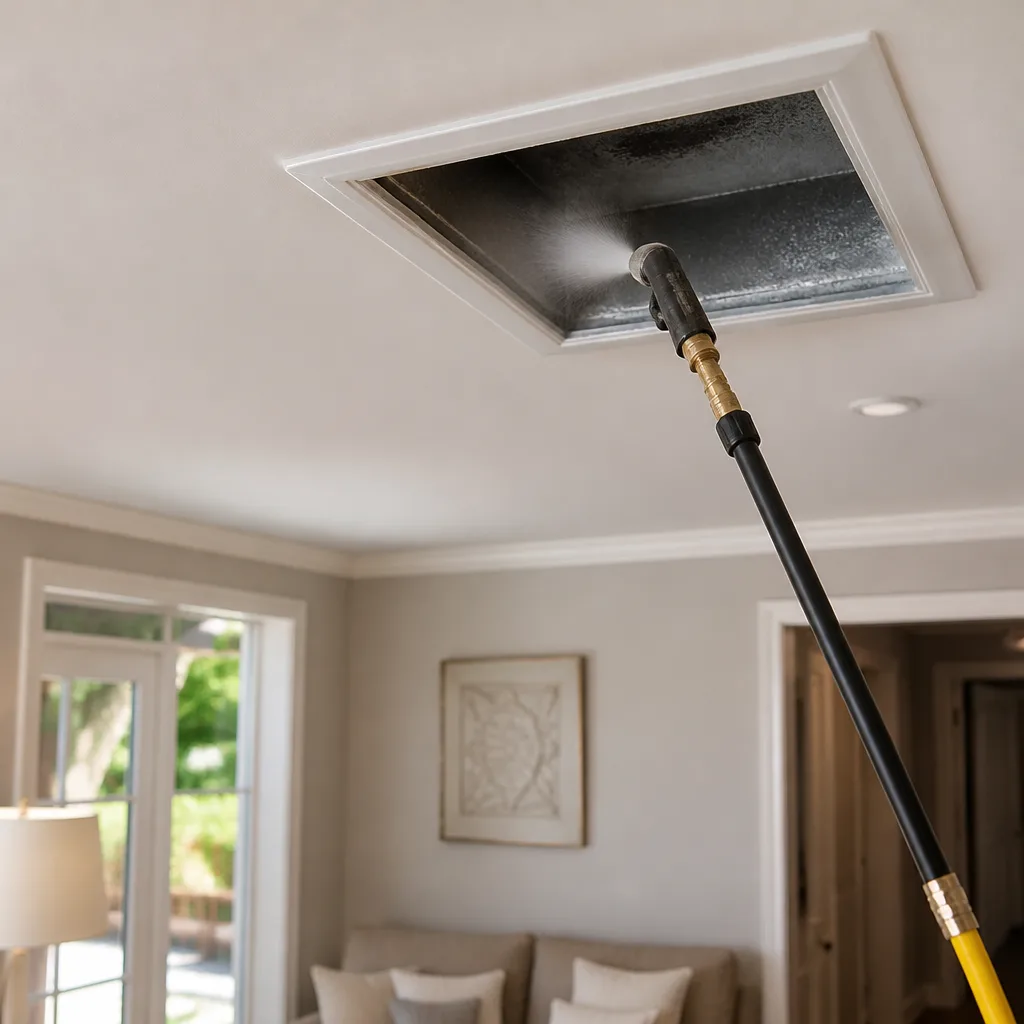 Sanitizing & deodorizing
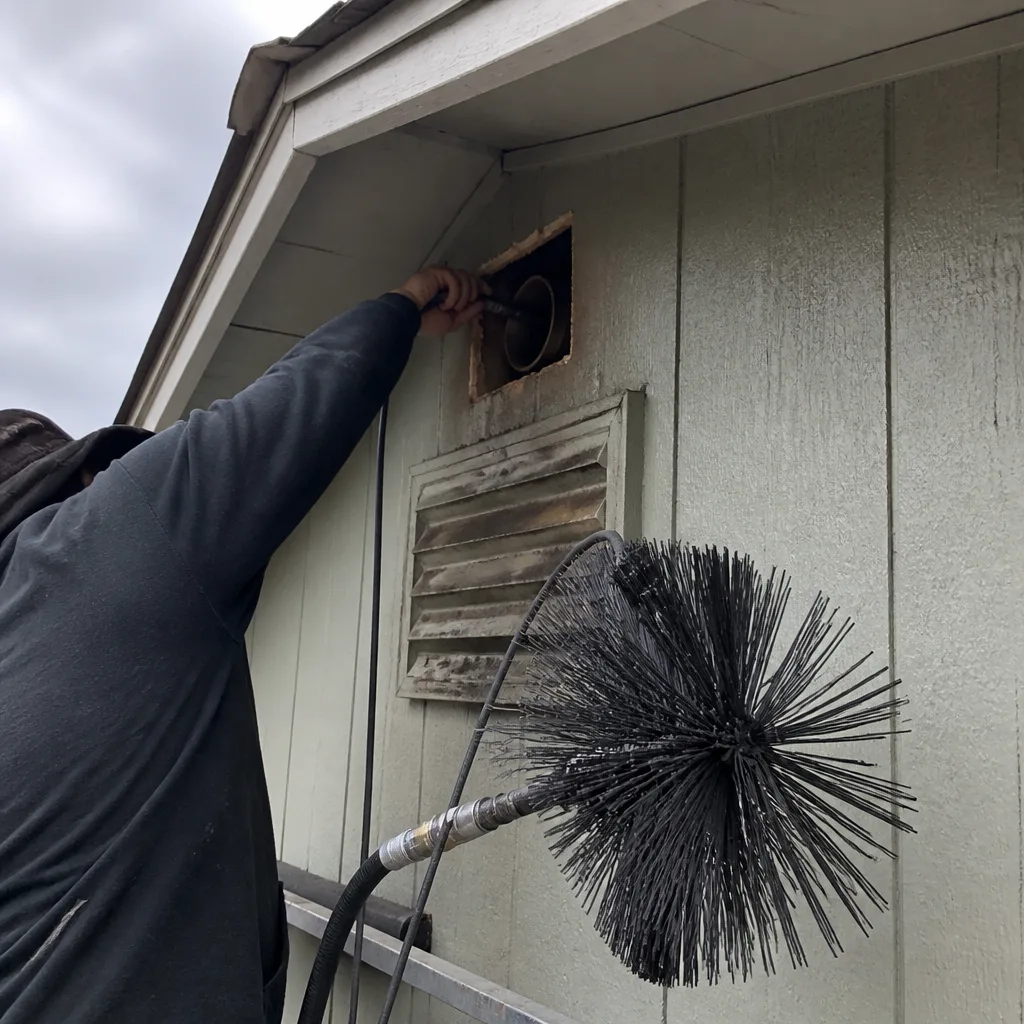
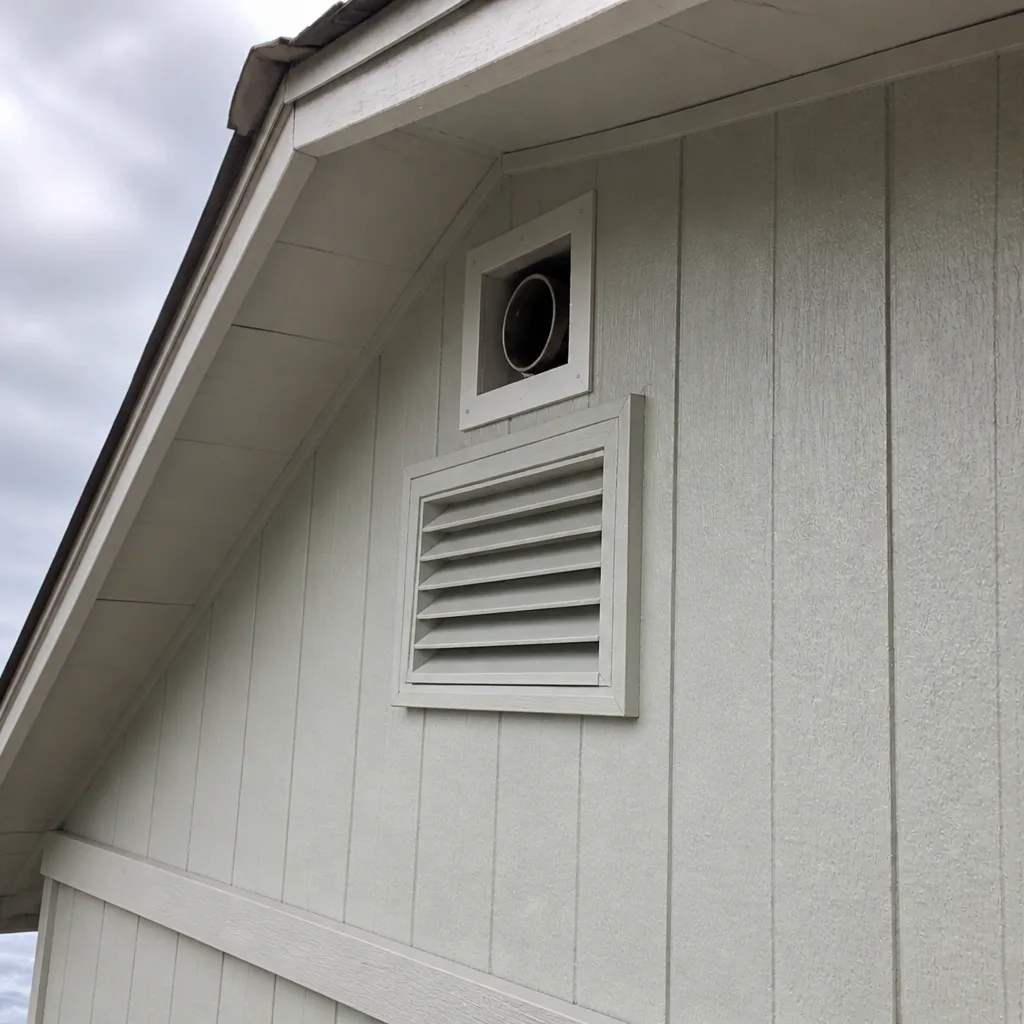
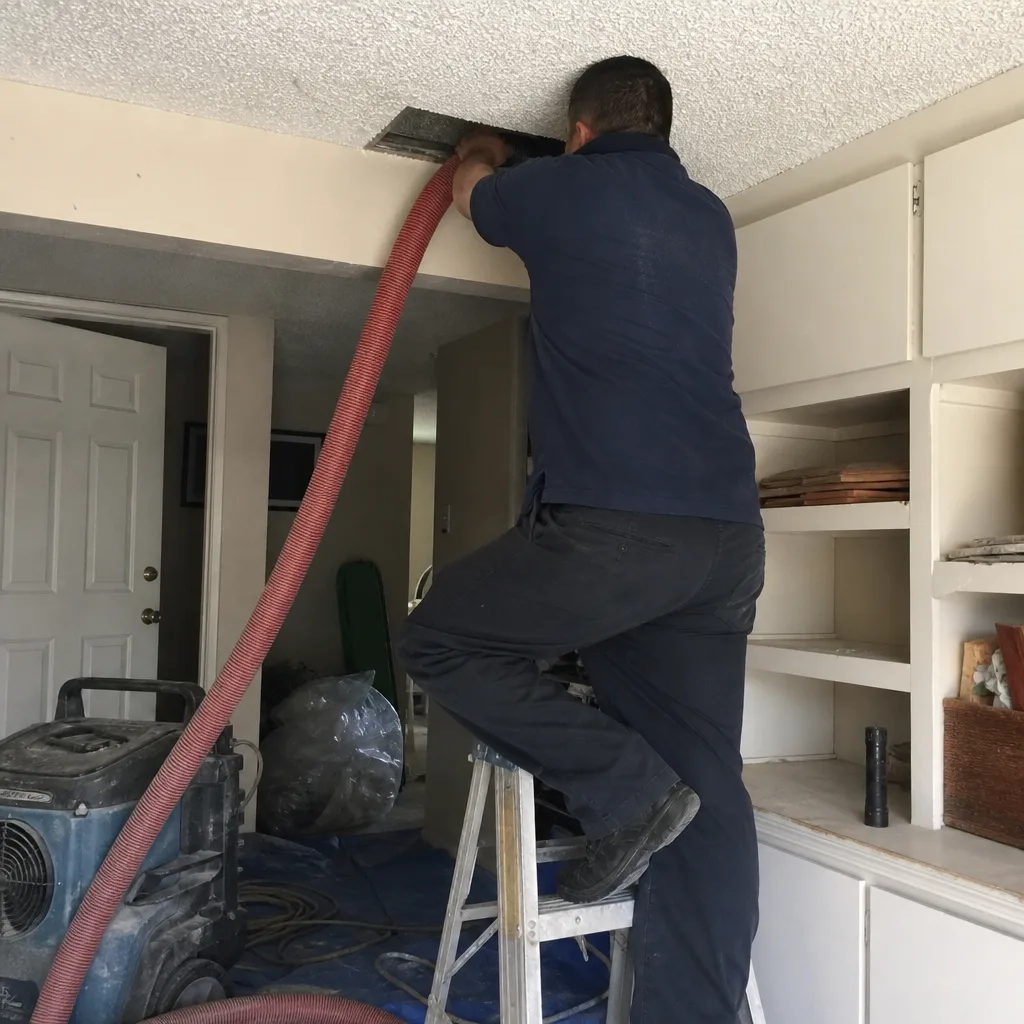
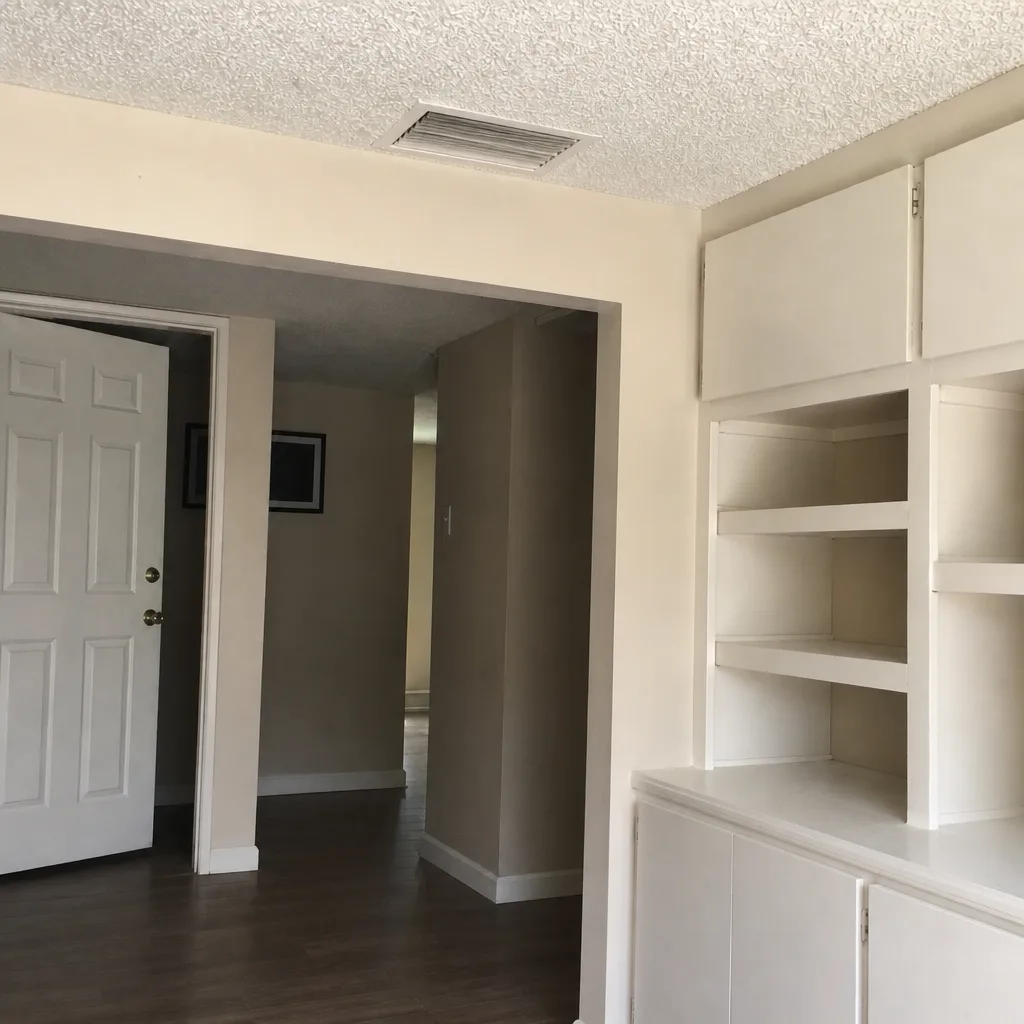
Whole-system duct and dryer vent check with before-and-after photos - you see exactly what came out of your vents
That "$99 whole-house special" is a bait ad - the real number appears once they are in your hallway, or the "clean" is a shop-vac at the register. We photograph the inside of your ducts before and after instead.
DIY vs Professional Air Duct Cleaning: The Ventura Homeowner’s Decision Guide
Here’s the part most DIY duct cleaning advice skips: a shop vac and a dryer vent brush can clean the first 18 inches of a duct run. Beyond that, you’re not removing debris, you’re rearranging it. The reason isn’t that homeowners are careless. It’s that moving contamination out of a pressurized duct system requires airflow force and mechanical agitation that no consumer tool generates. This guide explains what DIY can honestly accomplish in a Ventura home, what it can’t, and how to tell which side of that line your house sits on.
Quick Answer
DIY air duct cleaning is worth doing only at the reachable edges: supply and return registers, the visible plenum near the air handler, and your dryer vent. Anything past the first accessible section needs professional rotary-brush extraction with commercial negative air pressure, because shop vacuums produce a fraction of the airflow needed to carry debris out of a 25-foot duct run. In Ventura homes with flex duct, recent renovation dust, pets, or allergy concerns, the job belongs to a professional from the start.
Styles & brands we work with
- Whole-home duct cleaning
- Dryer vent cleaning
- Camera inspection
- Sanitizing & deodorizing
Table of Contents
- Why Duct Cleaning Is a Physics Problem, Not a Cleaning Problem
- What DIY Legitimately Handles (and How to Do It Right)
- What Professional Equipment Actually Does Inside a Duct
- When DIY Makes the Professional Job Harder
- The Ventura Decision Framework: Four Factors
- Dryer Vent Cleaning: The One DIY Project Worth Taking On
- What Professional Cleaning Costs and Why Quotes Vary
- Common Mistakes to Avoid
- When to Call a Professional
- Frequently Asked Questions
Why Duct Cleaning Is a Physics Problem, Not a Cleaning Problem
Dust inside a duct isn’t sitting still waiting to be wiped. It’s held in place by a thin film of moisture and static, then continuously replenished by the air handler running several times a day. To remove it, you need two things at once: enough airflow to lift the material off the duct wall and carry it out, and contact with the wall so the material actually detaches.
Professional duct cleaning relies on what the trade calls source removal. That means agitation, containment, and extraction happening together. Consumer vacuums fall short by an order of magnitude on the airflow side. A typical shop vac moves enough air to clean a floor, not enough to keep a column of debris suspended in a long, round pipe.
In a Ventura home, this matters more than it might in a wetter climate. Our air is dry most of the year, and dry dust is lighter and more easily stirred. A weak vacuum doesn’t just fail to remove it. It can lift it into the airstream and drop it back into the system a few feet downstream.
The two forces that need to work together
- Static pressure (negative pressure): a commercial extraction unit pulls the whole system into a slight vacuum so loose debris moves toward the collection point rather than into living space.
- Mechanical agitation: a rotary brush or air whip physically contacts the duct wall, breaking the film that holds dust in place.
- Containment: sealing registers and the air handler opening so whatever is loosened has exactly one place to go.
Remove any one of those three and you have surface cleaning at best, and at worst a system full of airborne debris that settles back into the ducts once you turn the thermostat on.
What DIY Legitimately Handles (and How to Do It Right)
There’s honest DIY work in duct maintenance. It’s just smaller than the internet suggests. Register cleaning, plenum wipe-down where the ductwork is physically reachable, and dryer vent maintenance are all within a homeowner’s ability. Done correctly, they reduce how much material a professional has to extract and they keep the visible parts of the system from looking worse than the hidden parts.
Register and grille cleaning, step by step
- Turn the HVAC system off at the thermostat so nothing is pulled through the system while you work.
- Remove each supply and return grille. On most Ventura homes, these lift out or release with two screws.
- Wash grilles in a utility sink or outside with a hose and a mild detergent. Dry them fully before reinstalling.
- Vacuum the exposed register boot with a brush attachment. Reach as far as the attachment allows without forcing anything into the duct.
- Wipe the visible duct surface just inside the opening with a damp cloth.
- Reinstall the grilles only after they’re dry, then run the system fan for a few minutes to confirm nothing is whistling or rattling.
Plenum and air-handler cabinet wipe-down
The plenum is the box-shaped transition where the air handler connects to the duct system, and it’s often the dustiest visible spot in the system. With power off, you can vacuum the outside of the cabinet and wipe down the accessible inner surfaces. Don’t reach into the blower compartment itself. The blower wheel is delicate, and if you bend a blade you’ve turned a cheap job into a repair.
What DIY doesn’t handle: the interior of long runs, the trunk line feeding multiple branches, and the return side where dust collects most heavily. Those are the sections that determine whether your home’s air is actually clean.
What Professional Equipment Actually Does Inside a Duct
This is where the gap between a brush on a drill and a professional system becomes obvious. A rotary brush on a cordless drill spins, but it doesn’t move air, and it doesn’t maintain contact pressure through a bend or a flex run. A trained technician using an air duct cleaning system does both at the same time.
The Rotobrush system we work with is a good example. It combines a rotating brush head on a flexible shaft with a high-volume vacuum hose running alongside it. The technician feeds the head down the duct, the brush scrubs the walls, and the vacuum pulls loosened material out as it goes. When the head reaches the far end of the run, the job is done in one pass, not several. The brush adjustments handle different duct sizes, which matters in a Ventura home where a single system often mixes rigid metal trunk line with flex branches.
Nikro extraction units handle the vacuum side at a scale a consumer tool can’t approach. They pull enough air to hold a full duct run under negative pressure throughout the job, so loosened debris travels toward the collection unit rather than drifting into a bedroom. That’s the specific reason we don’t recommend the compressed-air-and-hope approach some cleaning services use. Compressed air moves dust. It doesn’t remove it.
What changes when contamination is heavier than routine dust
For properties with recent renovation dust, suspected microbial growth, or contamination from a long period of no service, we bring Abatement Technologies air-filtration equipment. It’s the same class of gear used in remediation work. In a situation like that, a filter on the back of a shop vac isn’t a containment strategy.
We also install and service Honeywell and Aprilaire whole-home air-quality systems. Cleaning the ducts and upgrading filtration in the same visit makes sense because the two are connected. Ducts cleaned today will stay cleaner longer with filtration that matches the home’s real load.
When DIY Makes the Professional Job Harder
The worst outcome of DIY duct cleaning isn’t failure. It’s damage that costs more to fix than cleaning would have. We’ve seen each of the following, and none of them are unusual.
- Disturbed debris that resettles elsewhere. A weak vacuum lifts fine dust into the airstream without capturing it. It drifts down a branch or into a room, and the system is now dirtier in a different place than it was before.
- Crushed or torn flex duct. Much of the flex duct in Ventura homes has an inner liner and a thin outer vapor barrier. A rigid brush snaked too far from either end tears the inner liner, and the tear becomes a dust-collection point going forward. Fixing it means replacing the run.
- Mold aerosolization. If the contamination includes microbial growth, aggressive DIY agitation without proper containment spreads spores through the house and into the HVAC coil. That’s a bigger problem than the original issue.
- Dislodged dampers and balance tabs. Some runs have internal dampers that adjust airflow to each room. A rigid tool pushed past one can knock it out of alignment, and suddenly one bedroom is cold and another is warm.
- Air-handler blower damage. Reaching into the blower compartment while the system is off is tempting. Bending a blower wheel blade costs real money to correct.
None of these are catastrophic on their own. Together, though, a disrupted DIY attempt turns a straightforward cleaning job into repair work. If your ducts already look like that, an honest dryer vent cleaning and duct assessment may need to come before any cleaning happens, because the system has to be sound before it can be cleaned properly.
The Ventura Decision Framework: Four Factors
Rather than a single yes-or-no rule, think of this as four factors. The more of them apply, the clearer it is that the job belongs to a professional.
1. Home size and system layout
In a smaller home with one air handler and short duct runs, DIY has a fighting chance at the accessible sections. The longer the runs, the more the physics works against you. In a Ventura home with multiple air handlers, a long trunk line, or a system spread across two floors, the reachable portions are a small fraction of the total system, and the only way the cleaning means anything is a full-job extraction.
2. Duct material
- Rigid metal duct: more forgiving of contact, but still requires airflow to remove debris beyond the reachable sections.
- Flex duct: the most common residential material and the least forgiving of DIY tools. Its corrugated interior traps dust in the ridges, which is also why it needs a brush with adjustable pressure rather than a fixed one.
- Ductboard: a fiberglass-lined material where aggressive agitation does real damage. Professional equipment adjusts for this. A shop vac brush doesn’t.
3. Contamination type
Routine household dust is one category. Construction dust after a remodel, pet dander from a new dog or cat, or anything that looks like growth on the duct lining is a different category entirely. The first may be manageable with professional cleaning. The second needs professional cleaning plus containment, and sometimes a filtration upgrade installed at the same time.
4. Health sensitivity
If anyone in the household has asthma, allergies, or a compromised immune system, DIY doesn’t make sense. It’s not that DIY is harmful to a healthy person; it’s that a partial cleaning won’t meaningfully change the air quality, and any disturbed debris can temporarily make things worse. That’s the wrong tradeoff to make in a home where air quality is the point.
Dryer Vent Cleaning: The One DIY Project Worth Taking On
Of the maintenance tasks we get asked about, dryer vent cleaning is the one where DIY has real value. It’s a fire-safety routine, and homeowners who keep it up genuinely reduce their risk. What makes it worth doing yourself is that it’s short (usually an inside run under ten feet), accessible from both ends, and doesn’t require moving high volumes of air.
How to do it correctly
- Unplug the dryer.
- Pull the dryer out far enough to disconnect the vent hose from the back.
- Detach the outside vent hood and remove the flapper.
- Use a vent brush or a vacuum with a long hose attachment to clear the run from both the outside and the dryer side.
- Vacuum the inside of the dryer’s lint trap housing and any accessible lint behind the drum.
- Reconnect the hose with a metal clamp (not tape), reattach the outside hood, and confirm the flapper opens and closes freely.
Where this stops being a DIY job: if the vent terminates on the roof, if it runs through a wall cavity more than a few feet with bends, or if lint has compacted into a solid mass. That’s when it’s worth calling someone with the tools for it, because a partially cleared vent gives you the illusion of safety without the substance. Dryer vent cleaning is a separate service here, not an upsell tacked onto an air duct visit. At Duct Cleaning Ventura, we treat it as the fire-safety job it is, and it’s the reason the company offers it on its own and not only bundled with a full cleaning.
What Professional Cleaning Costs and Why Quotes Vary
Professional air duct cleaning for a typical single-family home runs in a wide range, and the honest answer is that it depends on the system. Square footage, number of registers, number of air handlers, duct material, and how much contamination is present all move the number. Rather than publish a teaser price that never holds up, we price each system individually and put it in writing before any work starts.
Several things drive the honest price up:
- More than one air handler or HVAC zone
- Flex duct that needs gentler, slower extraction than rigid metal
- Contamination that requires Abatement Technologies equipment and containment
- Duct repair needed on top of cleaning (a crushed flex run, a disconnected joint)
Several things should drive the price down, honestly: fewer registers than average, a single air handler, and a system that’s been serviced recently. If a quote comes in dramatically lower than others, the useful question isn’t whether it’s a bargain, it’s what it’s leaving out. A low quote usually means the extraction stops at the registers, or the technician is one person with a shop vac in a company shirt.
That’s also the reason we offer one flat price per system, agreed before work starts, and provide before-and-after photos of your own ducts. Not stock photos, not a generic “after” from someone else’s house. You get to see the difference between the photo taken before the cleaning and the one after, which is the only real proof that the work was done.
Where the professional cost lands on a Ventura home is worth discussing on the phone, because a written estimate is far more useful than a range. The estimate is free, and it’s the number you can hold us to.
Common Mistakes to Avoid
- Assuming a shop vac handles the whole run. It doesn’t. The first reachable section gets clean, and everything past it stays where it was. Reaching further with a rigid tool risks tearing flex duct.
- Running compressed air through the ducts. This moves dust into rooms and onto surfaces. It doesn’t remove anything, and it can aerosolize contamination you’d rather not breathe.
- Ignoring the return side. In most Ventura homes, the return duct is the dirtiest part of the system because it carries air before filtration. Cleaning the supply side only and calling it done is a partial job.
- Removing grilles and forgetting to reseal the register boots. A small gap between the boot and the drywall is where a surprising amount of dust enters the system. Reseal it before reinstalling the grille.
- Treating the dryer vent as a once-ever task. Lint accumulates continuously, and a vent that was clear two years ago may be significantly restricted now. It’s routine maintenance, not a repair.
- Hiring a cleaning-only company that finds a problem and then leaves. If a technician finds crushed flex duct or a disconnected joint and can only mark it on a report, you’re stuck finding someone else to come back. Make sure whoever cleans the ductwork can repair it.
- Skipping a filtration check. Cleaning ducts without addressing a weak filter setup means the duct system will be dirty again sooner than it needs to be. Honeywell and Aprilaire systems are worth looking at during the same visit.
When to Call a Professional
If any of the following describes your home, DIY is the wrong first move. Recent renovation or construction in the home, visible dust blowing from a supply register, a pet added to the household, anyone with asthma or significant allergies, a system that hasn’t been professionally serviced in years, or a duct system with flex branches running more than a few feet past the register. Each of those pushes the job past what consumer equipment can reach. In our experience, the most useful thing we can tell a Ventura homeowner is what we actually find in their ducts, and then hand them a written price before any work starts. Duct Cleaning Ventura offers free estimates in Ventura – call (844) 834-2166. We answer 24/7. Fast dispatch from 7am to 7pm, Sunday through Friday.
Frequently Asked Questions
Most single-family homes fall into a broad range depending on square footage, number of registers, number of air handlers, and duct material. Rather than quote a teaser number, we price each system individually and give it to you in writing before work starts. That flat price covers the whole system, not a per-vent charge that climbs as the technician counts. Call (844) 834-2166 for a free estimate.
You can clean the first 18 inches of each run and the accessible plenum, and that’s about the limit. The interior of a 25-foot run requires airflow and agitation that a shop vac can’t produce, and a rigid brush pushed too far can tear flex duct. Register cleaning is worth doing yourself. The rest is not.
Low quotes usually mean the work is limited to register cleaning and a quick pass with a shop vac, with no rotary-brush extraction and no containment. Occasionally it means the technician stops at the first reachable section and calls the job done. The price is low because the cleaning is partial. Ask a company what equipment they use and whether they’ll show you before-and-after photos of your own ducts.
The honest way is before-and-after photographs of your specific ducts, taken by the technician. That’s the proof we provide, because it’s the only check that means anything. A verbal assurance and a receipt with a price is not the same thing.
For most homes, every few years is a reasonable general rhythm, and sooner if there’s been a renovation, a new pet, visible dust at the registers, or a long gap in service. Homes with allergy-sensitive occupants often need it more frequently. The right answer depends on what’s in the system, which is why a look before committing is useful.
Yes. Duct repair is a separate service we offer on its own, and it’s the reason we don’t have to hand you a report telling you to call someone else. If a cleaning turns up a crushed flex run or a disconnected joint, we can fix it at the same visit rather than scheduling a second trip.
See the difference
 Before
 After
 Before
 After
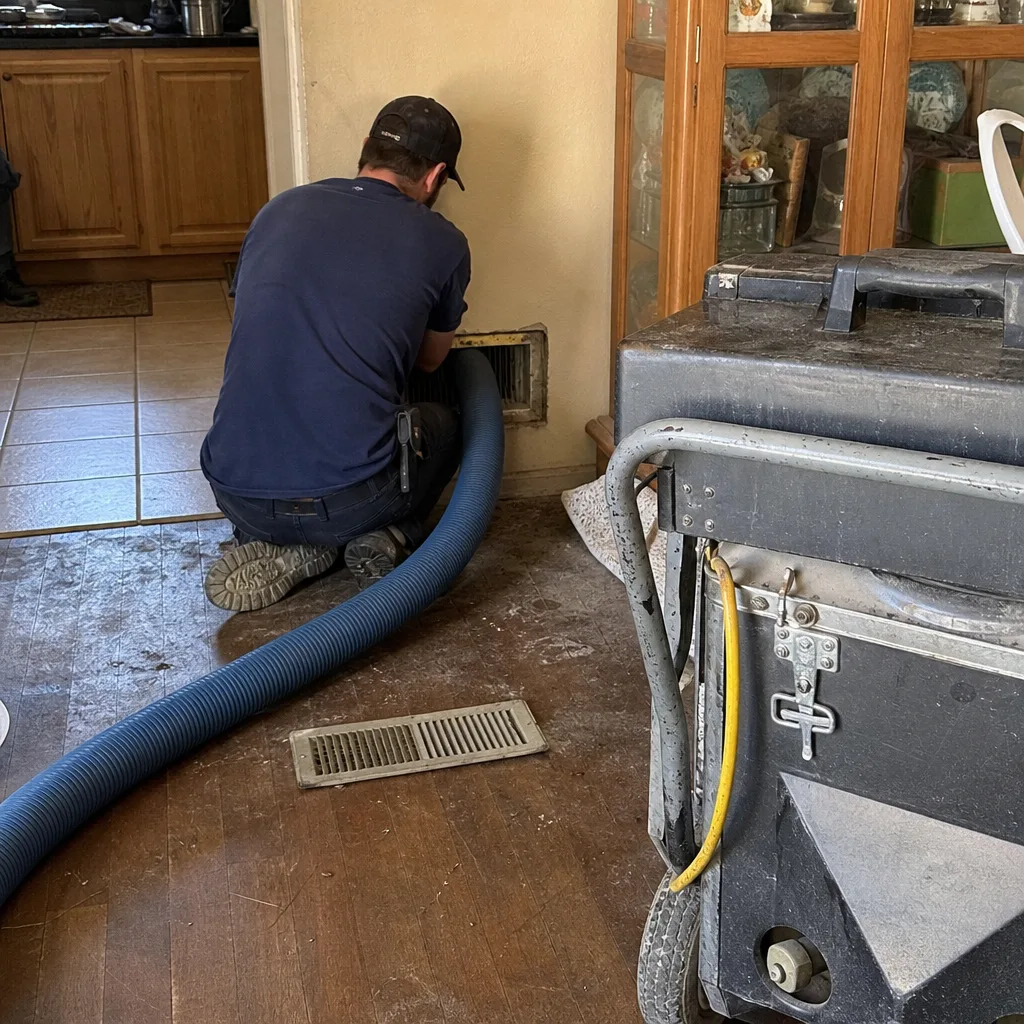 Before
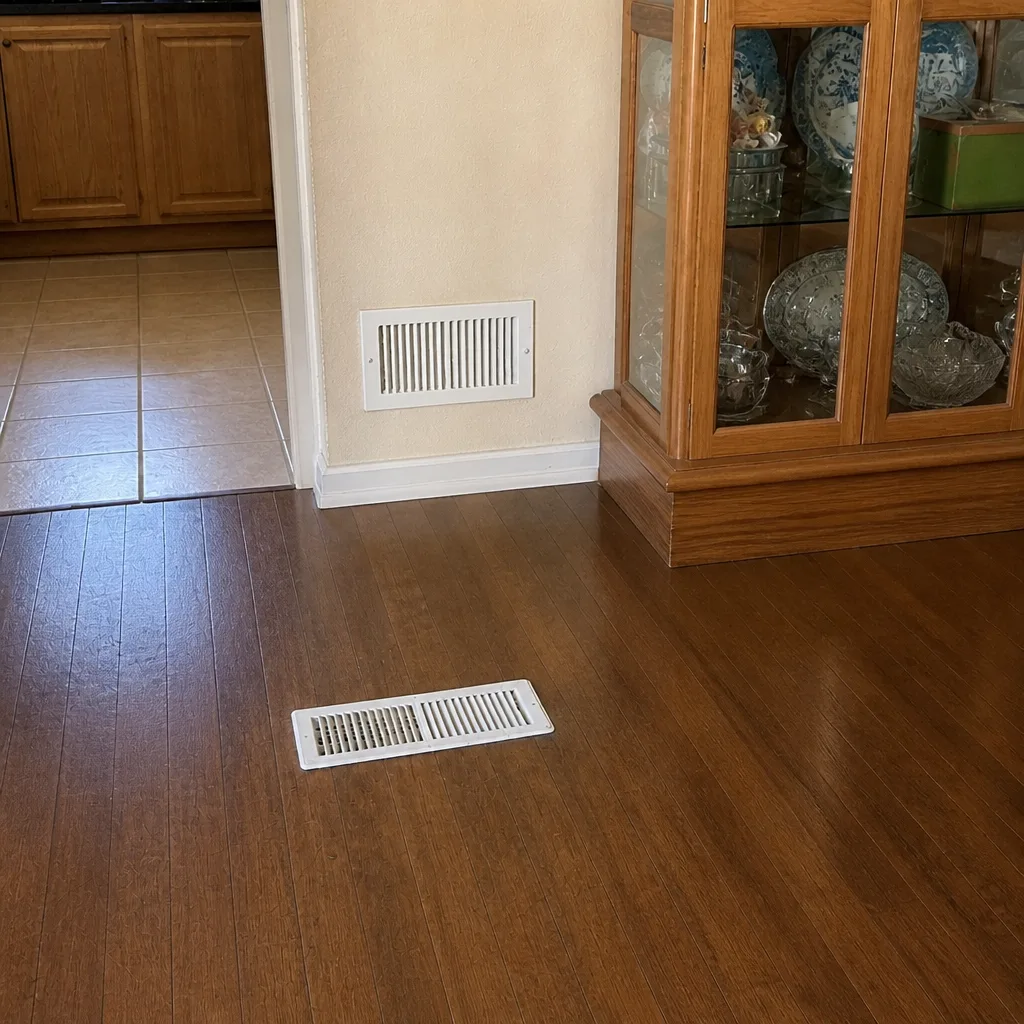 After
The Bottom Line
DIY duct cleaning is honest work, but only at the margins. Clean your registers, wipe down the accessible plenum, and stay on top of your dryer vent. Those three tasks genuinely matter, and the dryer vent in particular is a fire-safety routine worth owning. Once you move past the first accessible section of the duct, the physics stops working in a homeowner’s favor. A rotary-brush extraction system running under commercial negative pressure is what gets the rest of the system clean, and the difference shows up in before-and-after photos of your own ductwork. Our technicians have up to 11 years of experience, and the estimate is free, in writing, and priced per system before any work begins.
Free Estimates in Ventura
If the ducts in your home haven’t been professionally cleaned in years, or recent work has left dust in the system, the useful next step is a look and a written price. Call Duct Cleaning Ventura at (844) 834-2166 for a free estimate. We answer 24/7. Fast dispatch from 7am to 7pm, Sunday through Friday. The estimate is free, the price is set per job by the written estimate, and you’ll see the before-and-after photos before we leave.
Written by the team at Duct Cleaning Ventura.